


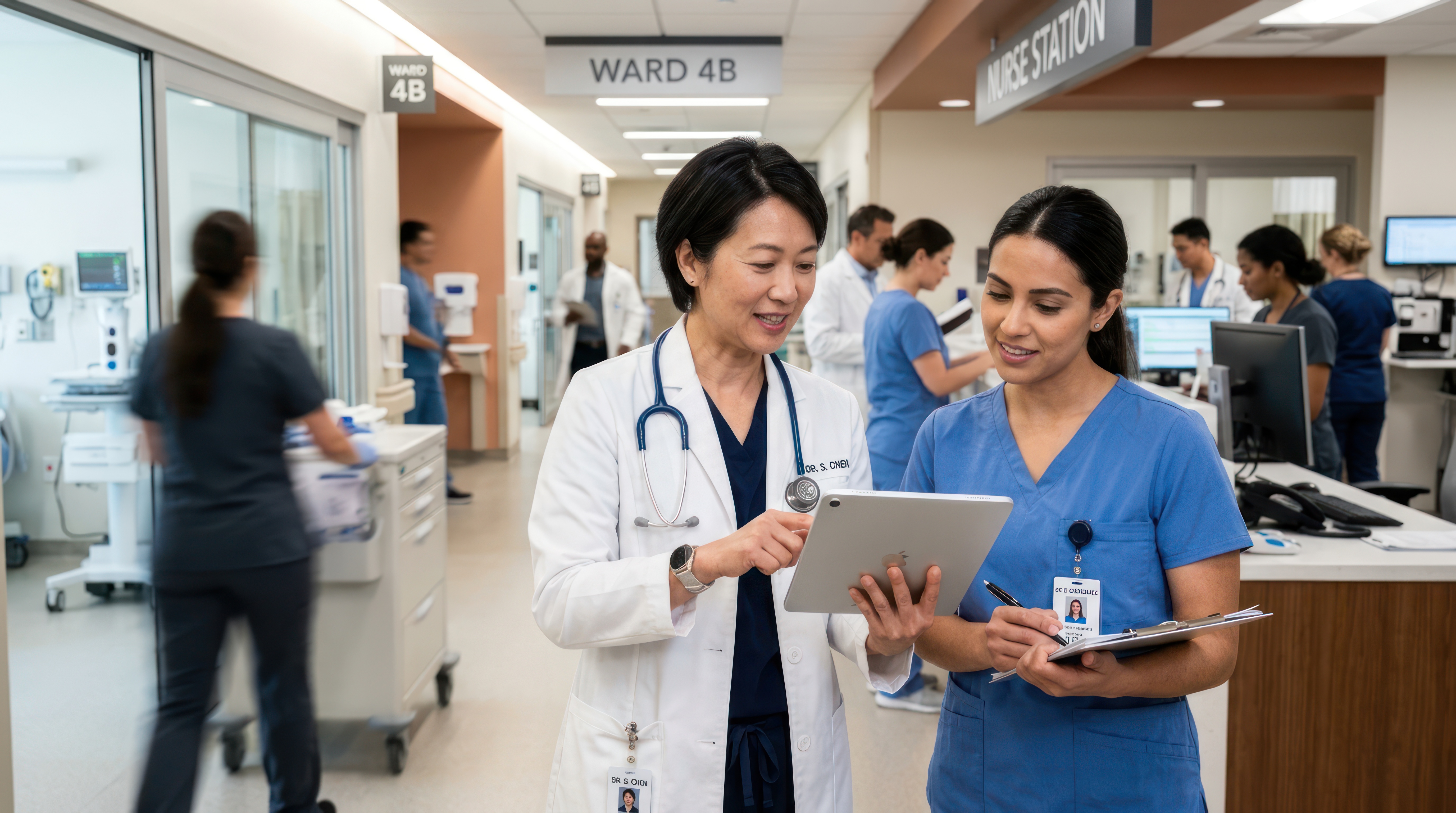
Healthcare leaders spend a lot of time talking about resources.
They talk about staffing shortages, budget constraints, procedure volumes, patient throughput, and supply chain challenges. All of those are real concerns. Yet one resource rarely gets the attention it deserves, despite influencing almost every aspect of daily operations.
Space.
Walk through almost any hospital and you'll see the same challenge playing out in different ways. Hallways become temporary storage areas. Equipment competes for floor space. Departments struggle to accommodate new technology without disrupting existing workflows. Clinical teams are constantly looking for ways to do more without expanding their footprint.
Healthcare facilities are being asked to increase capacity while working within the same walls they have occupied for years.
In that environment, every square meter matters.
The Hidden Cost of Bulky Equipment
When hospitals evaluate new technology, they often focus on efficacy, compliance, safety, and cost.
Those factors are important, but there is another question that deserves equal consideration.
Where is this thing actually going to go?
The answer is not always straightforward.
Many healthcare technologies require dedicated rooms, plumbing infrastructure, ventilation systems, chemical storage, or large operating footprints. While each requirement may seem manageable on its own, together they create friction that can make implementation more difficult than expected.
Every additional piece of equipment impacts workflow. It changes how staff move through a department. It affects cleaning routines. It creates obstacles that teams must work around every day.
The result is that valuable clinical space becomes occupied by equipment that was never designed with real-world hospital environments in mind.
Why Convenience Is More Than a Nice-to-Have
At UV Smart, convenience was never viewed as a luxury feature.
It was considered a design requirement.
When developing the D60, the goal was not simply to create another high-level disinfection device. The goal was to create a product that could fit naturally into the environments where clinicians already work.
That distinction matters.
Many traditional reprocessing systems come with infrastructure requirements that influence where they can be installed. Water connections, chemical handling procedures, ventilation requirements, and dedicated processing areas all influence facility planning.
The D60 takes a different approach.
Because it uses UV-C technology, it does not require water during the disinfection process and does not rely on disinfectant chemicals or consumables. You can insert the D60 into your desired area and our top of the device power outlet allows you to push it flush against the wall, and plug it into any outlet. Our low consumption on electricity makes it convenient to place anywhere.
Removing those requirements creates flexibility.
Instead of designing workflows around the disinfection system, healthcare teams can place the disinfection system where it best supports their workflow.
Curious what it looks like in your department? Email us or connect on LinkedIn to get access to our VR app that allows you to imagine the D60 in your desired space.
The Case for Decentralized Disinfection
Historically, many healthcare facilities have centralized reprocessing activities.
The logic is understandable. Centralization creates consistency and allows equipment to be managed in one location.
The downside is that devices spend a significant amount of time moving between departments and add pressure to an extremely busy and vital department.
An endoscope used in a clinic may need to be transported for reprocessing before it becomes available again. A TEE probe may travel through multiple steps before it returns to the cardiology department. Every handoff introduces delays, labor requirements, and opportunities for damage.
Healthcare organizations are increasingly looking for ways to bring critical processes closer to the point of care.
That is where device design becomes important.
The D60 was specifically designed to support decentralized workflows, allowing disinfection to take place directly in clinics, outpatient departments, and wards rather than requiring transport to a centralized location.
When a device can be disinfected where it is used, transportation decreases, turnaround times improve, and clinicians gain faster access to the equipment they need.
Small Footprint, Big Impact
Hospital space is expensive.
Not just from a construction perspective, but from an operational perspective as well.
Every additional obstacle affects movement throughout a department. Staff push carts around it. Cleaning teams work around it. Patients navigate around it.
That is why physical dimensions matter more than many manufacturers realize.
The D60 was intentionally designed with a narrow depth of 47 cm, allowing it to sit against a wall instead of extending unnecessarily into valuable floor space.
Compare that to many of the items already competing for space throughout a hospital. Ultrasound systems, mobile workstations, medication carts, IV poles, linen carts, and storage cabinets often extend significantly farther into corridors and work areas.
The goal was not simply to make the device smaller. The goal was to make the device easier to live with.
Because the best technology is often the technology that integrates so naturally into a workflow that staff stop thinking about it.
Why the D45 Follows the Same Philosophy
The same thinking guided the development of the D45.
Many healthcare professionals are surprised by how compact the system feels compared to what they expect from a disinfection device.
That is intentional.
The D45 was designed to fit comfortably within patient-facing environments without creating the impression of industrial equipment being placed in a clinical setting. Its size is comparable to many devices already found throughout hospitals, allowing departments to integrate it without major facility modifications.
Equally important, UV-C technology eliminates concerns associated with storing or handling disinfectant chemicals near patient care areas.
Because there are no chemical consumables involved in the disinfection process, departments can focus on workflow and accessibility rather than chemical storage, ventilation considerations, or managing hazardous materials. The each UV Smart product follows the same philosophy, delivering automated disinfection without water, wipes, chemicals, or other consumables during the disinfection process.
For departments that want disinfection closer to the point of care, that flexibility can make a significant difference.
Good Design Should Remove Barriers
Healthcare teams do not need more obstacles.
They do not need another machine that requires a dedicated room. They do not need another process that creates transportation delays. They do not need another technology that forces them to redesign workflows around infrastructure requirements.
What they need are options that fit the realities of modern healthcare.
That means devices that are easy to place, easy to operate, and easy to integrate into existing environments. When hospitals evaluate new technology, the conversation should not stop at efficacy and compliance.
It should also include a simple question:
How much space does this require, and how much space does it give back?
Because in healthcare, space is more than a facility concern. It is a workflow resource. And it may be one of the most valuable resources a hospital has.

.png)
.png)


.jpg)
