


In healthcare, we focus on what enters the patient.
But what about everything else?
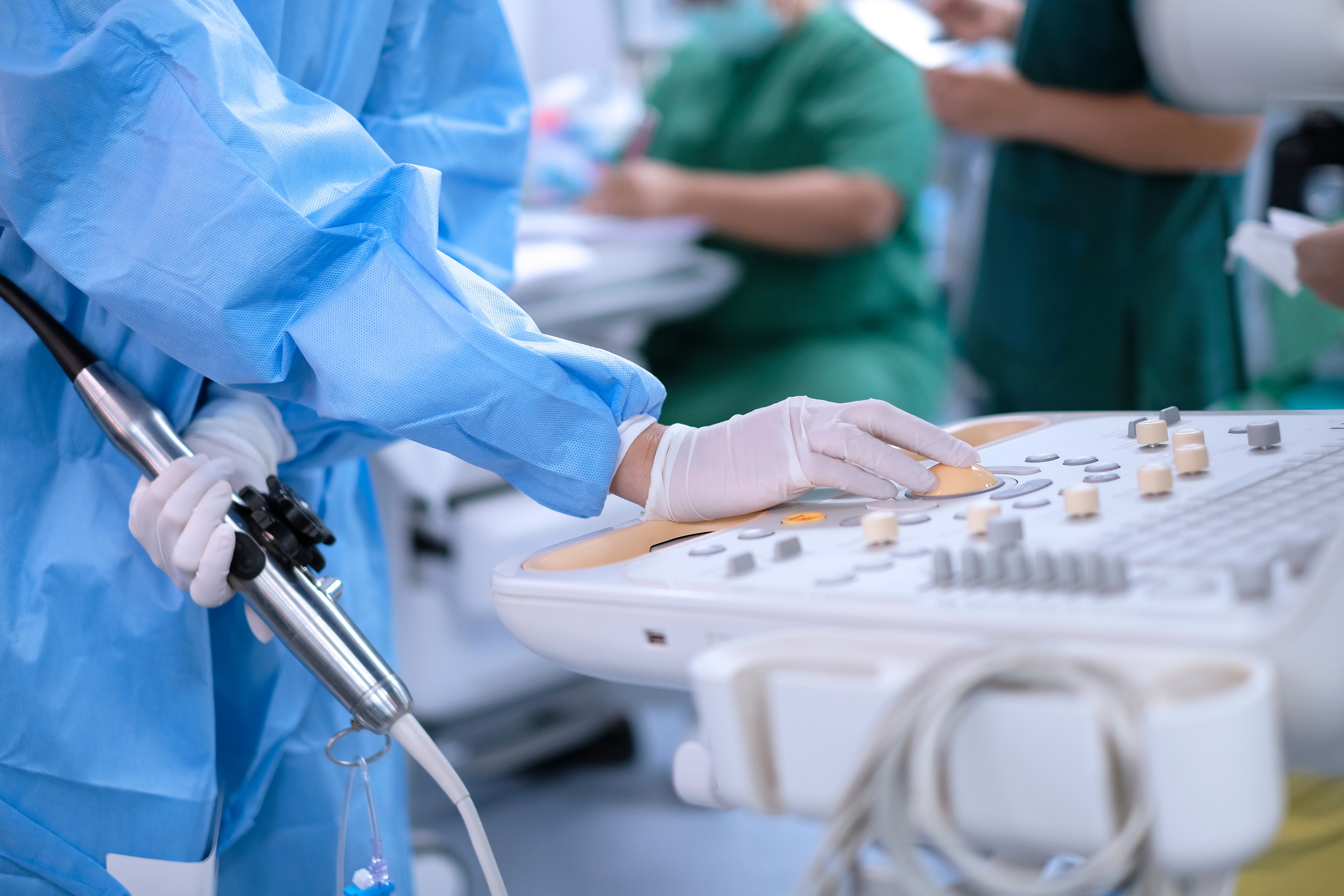
Every time a probe or scope is used, clinicians handle far more than just the insertion point. They adjust grip, reposition during procedures, transport the device, and prepare it for the next patient.
And yet, in many reprocessing workflows, only the “used” part gets the attention.
The most touched part of the device is often the least disinfected.
The Overlooked Risk in Plain Sight
Think about the lifecycle of a probe or scope in a single day:
- It is handled during the procedure
- It is carried between rooms or departments
- It is placed on trays, carts, or surfaces
- It is touched again during reprocessing
The handle becomes a high-contact surface, repeatedly exposed to hands, gloves, and environmental contamination.
But most automated systems and chemical workflows are designed around the insertion area, not the full device.
That leaves a gap.
And in infection prevention, gaps are where risk lives.
Why “Good Enough” Isn’t Actually Good Enough
In many departments, the handle is:
- Wiped manually
- Cleaned inconsistently
- Or overlooked entirely
This creates variability between users, shifts, and departments.
And variability is one of the biggest threats to compliance.
If you’ve ever dealt with audit pressure, you already know this.
Read more:
Audit Checklist: 10 Non-Negotiables for Probe Reprocessing
When documentation is tight but the process itself has blind spots, confidence starts to break.
The Problem With Partial Disinfection
Here’s the reality most teams do not say out loud:
If only part of the device is disinfected, the process is incomplete.
Microorganisms do not differentiate between “critical” and “non-critical” surfaces when it comes to transfer.
The handle can move contamination:
- Between patients
- Between clinicians
- Across environments
And because it is not always tracked or validated, it becomes an invisible weak point in your infection prevention strategy.
From Assumed Clean to Fully Covered
Traditional workflows often rely on assumptions:
- “It was wiped earlier”
- “It looks clean”
- “Someone handled it properly”
But assumptions are not evidence.
Modern infection prevention is shifting toward demonstrated, repeatable processes, not variable human steps.
Explore how consistency impacts workflow and safety:
How UV-C Supports Faster Clinical Turnover Without Adding Risk
When every step is standardized, you remove doubt from the process.
A Different Approach to Device Disinfection
The UV Smart D60 is designed to address what other systems leave behind.
It is intended to achieve high-level disinfection of the external surfaces of channel-less invasive medical devices using UV-C light .
That means:
- Not just the insertion point
- Not just the visibly soiled area
- But the full external surface of the device
Including the handle.
This removes the need to rely on separate manual steps or assumptions about what was or was not cleaned.
See how the D60 fits into your workflow.
What This Means for Your Team
When the entire device is addressed in a single, validated cycle:
- Variability is reduced
- Staff no longer need to rely on memory or manual consistency
- Speed in the process increases
- Audit readiness improves
And perhaps most importantly:
You eliminate the question no one wants to ask out loud.
“Was the handle actually disinfected?”
The Takeaway
The part everyone touches is the part most systems ignore.
In a world where infection prevention is under constant scrutiny, that is a risk worth rethinking.
Because true confidence in your process does not come from what you hope was done.
It comes from what you know was covered.
Want to See the Difference?
If you are evaluating your current workflow or preparing for your next audit, now is the time to look at the full picture.
Speak with a specialist about your current process.

.png)
.png)


.jpg)
