


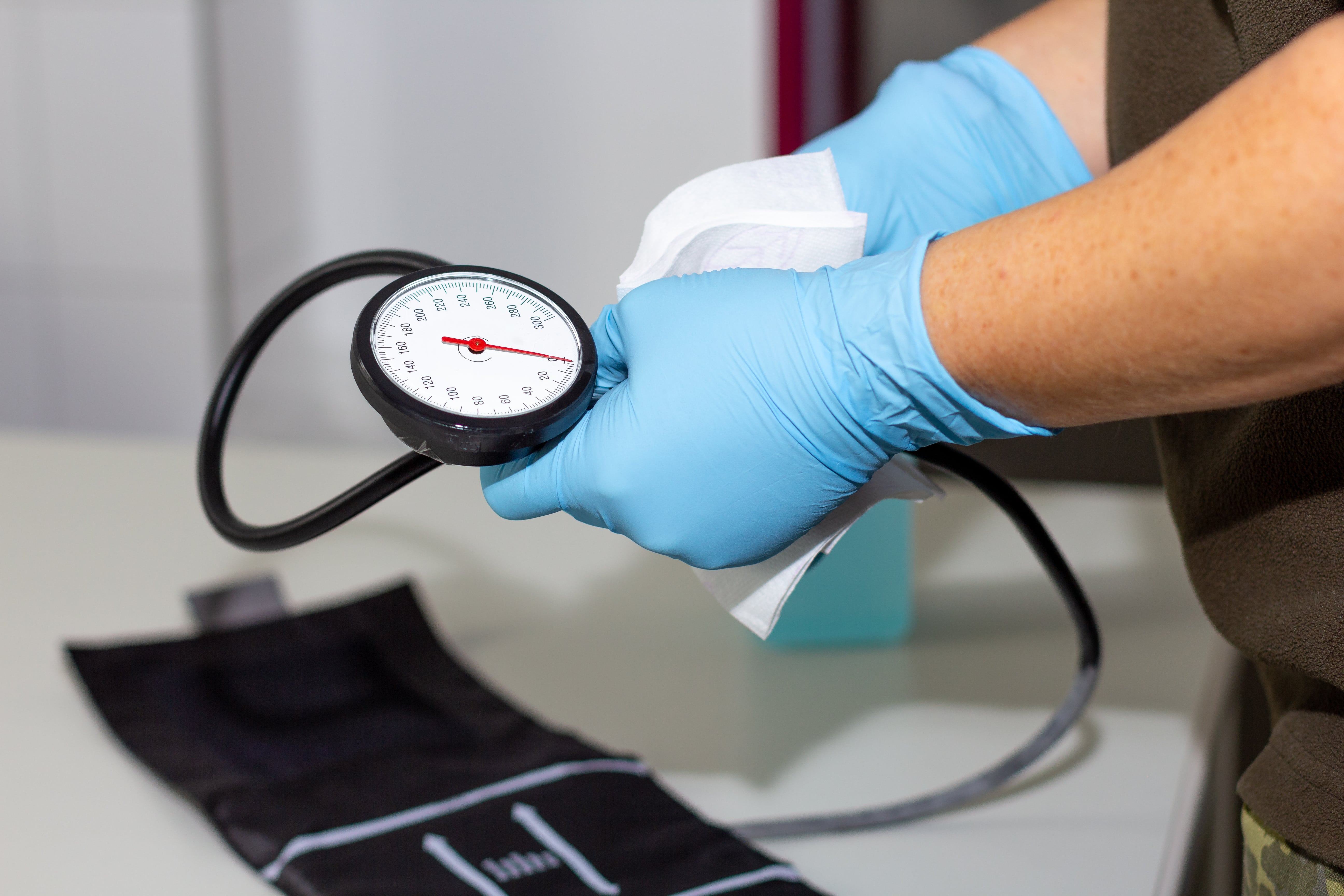
Preventing cross‑contamination in hospitals is a constant challenge, especially as the number of shared, mobile, and handheld devices grows every year. Many hospitals put most of their attention on cleaning room surfaces, such as bed rails and tables, while non‑critical medical devices (like stethoscopes, blood pressure cuffs, and handheld electronics) remain a persistent and often underestimated cause of infection transmission.
According to the Association for Professionals in Infection Control and Epidemiology (APIC), non-invasive, portable clinical items can remain contaminated with microorganisms for extended periods and often fall outside routine disinfection workflows. These devices travel from room to room, patient to patient, and often staff to staff, making them prime candidates for cross‑contamination.
This article helps hospitals identify which devices pose the highest risk, provides a practical risk-scoring framework, and highlights when automated UV‑C disinfection (like UV Smart’s validated systems) becomes essential.
Why Device Contamination Is a Major Blind Spot
Even with strong protocols, cross‑contamination continues to contribute substantially to healthcare‑associated infections. Research shows that 20–40% of HAIs stem from cross‑infection, often through contaminated hands or surfaces
APIC notes that shared clinical devices are typically not assigned to a single patient, which means they’re frequently overlooked in cleaning cycles, even though microorganisms can survive on them for prolonged periods depending on material and environmental factors.
👉 Hospitals seeking to close these gaps can explore how UV Smart’s automated disinfection workflows ensure every device receives validated, consistent disinfection, no steps skipped, no variability.
Which Medical Devices Carry the Highest Cross‑Contamination Risk?
Below are high‑touch devices identified in infection‑control guidance as frequent reservoirs for contamination.
Stethoscopes
Stethoscopes are among the most commonly shared medical tools. CDC guidelines recommend dedicated, patient‑specific stethoscopes for isolation cases to avoid cross‑transmission, reinforcing the infection risk of shared devices.
Blood Pressure Cuffs & Saturation Monitors
APIC highlights these non‑critical devices, blood pressure cuffs, pulse oximeters, and similar items, as key reservoirs because they contact intact skin but aren’t disinfected as rigorously as critical devices.
Handheld Electronics (scanners, phones, tablets)
Although not explicitly covered in APIC’s non‑critical device brief, studies frequently identify electronics as significant contamination sources. Their complex shapes and constant handling make them difficult to clean.
Therapy Tools & Multiple‑Use Patient Items
Items like therapy toys or shared accessories often circulate without adequate disinfection cycles.
A Practical Risk‑Scoring Framework for Hospitals
Hospitals can evaluate their contamination risk using a simple scoring approach:
Frequency of Use
How often is the device handled daily?
High-frequency items (stethoscopes, BP cuffs) represent higher risk.
Number of Users
Devices shared across departments or between multiple clinicians have a significantly higher contamination potential.
Device Material & Complexity
Porous materials or complex surfaces offer more surface area for microbial survival.
Current Cleaning Compliance
Cross‑contamination events often stem from improper or inconsistent cleaning practices, which can spread pathogens such as MRSA and C. difficile.
Required Turnaround Time
Devices needing rapid reuse are at higher risk of incomplete cleaning cycles.
Signs Your Hospital Needs Automated UV‑C Disinfection
Hospitals should consider moving to automated UV‑C when they identify:
High Rate of Shared Device Usage
Shared non‑critical devices are repeatedly flagged as reservoirs in APIC and CDC guidance.
Evidence of Workflow Gaps or Inconsistent Manual Cleaning
Improper cleaning practices significantly increase the spread of HAIs, leading to prolonged hospital stays and increased costs.
Increasing Pressure on Staff
Manual disinfection is tedious, time‑consuming, and prone to human error.
Need for Documented, Traceable Disinfection Outcomes
UV Smart’s validated disinfection cycles ensure consistent outcomes that support accreditation and audit readiness.
Why UV Smart? Bringing Reliability to Device Disinfection
UV Smart solutions allow hospitals to:
- Standardize disinfection for the highest‑risk devices
- Reduce cross‑contamination through validated, automated UV‑C cycles
- Improve workflow efficiency with rapid turnaround
- Reduce staff burden by removing manual inconsistencies
👉 Want a tailored assessment for your hospital? UV Smart offers on‑site evaluations to identify exactly where automation can reduce contamination risks. Let’s schedule a session.

.png)
.png)


.jpg)
